办公照明,跟着工作场景调整
Office Lighting That Follows the Task
办公照明不只是决定吊顶里放什么灯。同一张桌子可能用于看屏幕、核对纸面资料和临时讨论,不同活动对光的感受并不相同。先了解一天中的工作变化,再协调自然光、灯具与控制方式,才能避免空间看着很亮,真正坐下却总在调整位置。
Office lighting involves more than choosing fixtures for a ceiling. The same desk may support screen work, checking paper documents and brief discussions, each with different lighting needs. Understand how work changes throughout the day, then coordinate daylight, fixtures and controls, so a bright-looking room does not leave occupants constantly changing position.
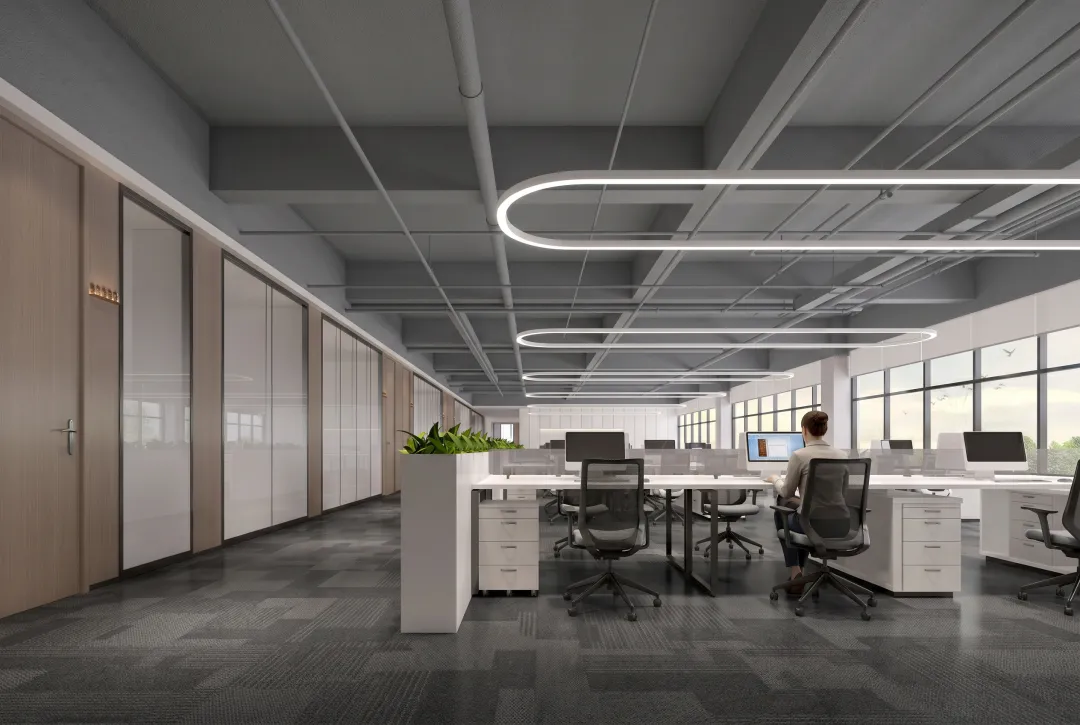
先看桌面,也看视线
Consider the Desk and the View
观察光时,既要看桌面,也要坐到使用者的位置。屏幕里的亮斑、抬头时直接可见的光源、桌面与周围的明暗变化,都值得记录。单凭灯具排列是否整齐,或效果图是否通透,不能判断实际工作时的体验。
Look at the desk and also sit in the user's position. Record bright reflections in screens, light sources directly visible when looking up, and changes in brightness between the desk and its surroundings. An orderly fixture grid or an airy rendering cannot establish the experience of doing actual work.
例如,靠窗工位在上午使用正常,下午却需要频繁转动屏幕。此时应一起检查座位方向、遮阳和灯光,而不是直接增加灯具。窗边与房间深处可以采用不同的控制分区,让调整与实际光线条件对应。
For example, a window-side desk may work well in the morning but require repeated screen adjustments in the afternoon. Review orientation, shading and lighting together rather than immediately adding fixtures. Separate control zones for the window edge and deeper areas can respond to their different daylight conditions.
让不同场景有清楚的切换
Give Each Setting a Clear Mode
纸面校对需要看清材料,线上会议还要考虑面部与背景,展示时则要观察屏幕与周围的关系。可以先列出确实会发生的场景,再确定分路或调节方式。场景过多、名称含糊,往往让使用者回到把所有灯打开的习惯。
Paper checking requires clear views of documents; online meetings also involve faces and backgrounds; presentations depend on the relationship between display and surroundings. List the settings that will actually occur before choosing circuits or controls. Too many modes with unclear names can send users back to switching everything on.
开放办公区的公共照明与个人任务灯,需要协调而非重复堆叠。局部补充有助于适应不同工作,但灯具位置、插座和线缆也会占据桌面。是否增加任务灯,应通过实际活动和样品试用决定,不必把每个工位配置得完全相同。
General lighting and individual task lights in an open office need coordination rather than duplication. Local lighting can support different tasks, but its fixtures, sockets and cables also occupy desk space. Decide on task lights through actual activities and sample trials instead of giving every workstation an identical set.
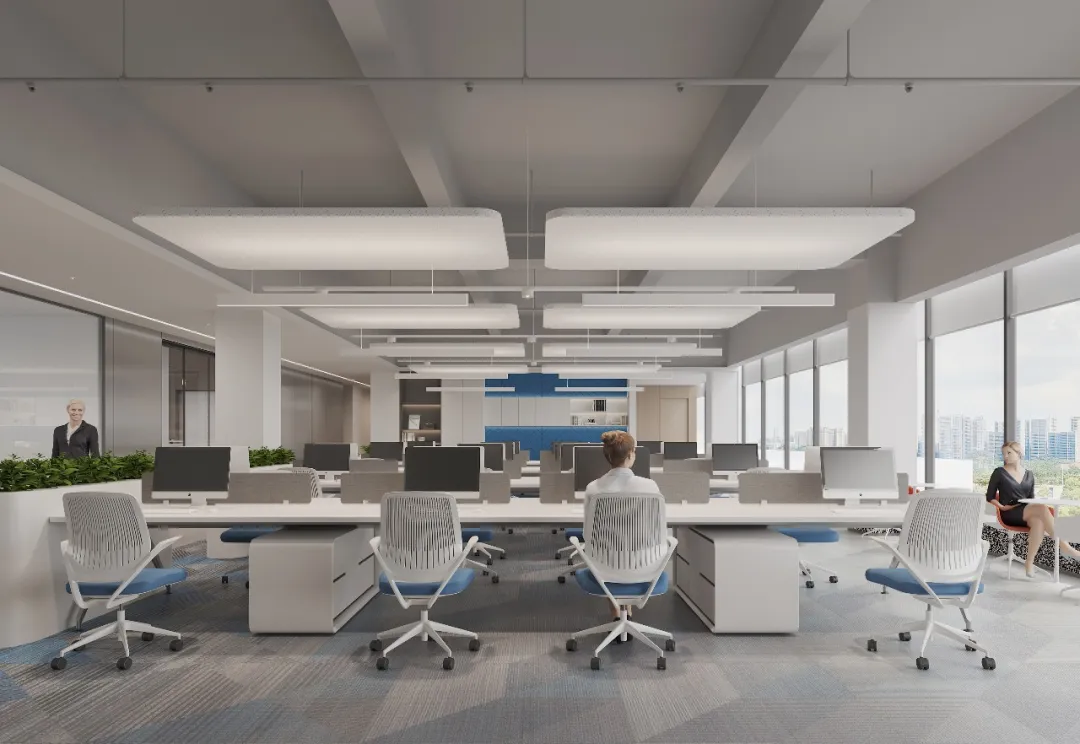
把灯光放回材料与设备之间
Coordinate Light with Materials and Equipment
高反射台面、玻璃隔断和投影画面会改变观察结果。选定材料后,应把样品、灯具位置与观看角度一起核对;家具布局调整时,也要重新查看照明关系。不要等吊顶和家具都确定后,才发现灯光正好落在不合适的位置。
Reflective worktops, glass partitions and projected images change what people see. Once materials are selected, assess samples together with fixture positions and viewing angles, and revisit the lighting when furniture moves. Avoid discovering an awkward light position only after both ceiling and furniture have been fixed.
与风口、检修口和其他吊顶设备协调时,整齐不是唯一目标。还需考虑后续清洁、替换与检修能否进行。复杂的隐藏构造可能让画面简洁,却把维护变得麻烦;简单可接近的安装方式,也应纳入比较。
When coordinating with air outlets, access panels and other ceiling equipment, alignment is only one goal. Consider access for cleaning, replacement and servicing. Intricate concealed details can simplify the appearance while complicating upkeep; straightforward, accessible mounting arrangements deserve comparison too.
用真实时段完成检查
Check at the Times People Actually Work
试用时安排靠窗、内部和会议位置,分别看屏幕、读纸张并进行一次视频通话。记录不同天气和傍晚的差异,检查开关标签是否易懂、常用模式能否直接找到。具体照明参数应结合场地与专业计算确认,照片只作为问题记录的一部分。
During trials, use window-side, internal and meeting positions to view screens, read paper and make a video call. Record differences across weather conditions and into the evening, and check that switch labels and common modes are easy to find. Confirm specific lighting parameters through site conditions and professional calculation; photographs are only part of the record.