工位收纳,让常用物品各就其位
Workstation Storage: A Place for Everyday Items
工位收纳的问题,常常不是柜子不够,而是物品没有明确去处。每天要拿的资料、偶尔使用的工具、个人随身物与等待处理的文件,混在一起就难以归位。先记录物品从哪里来、停留多久、由谁取走,再决定收纳位置,比直接增加柜体更容易找到问题。
Workstation storage problems often arise because items lack a defined home, rather than because there are too few cabinets. Daily documents, occasional tools, personal belongings and pending paperwork become hard to return when mixed together. Record where items come from, how long they stay and who takes them away before deciding on storage locations.

按频率与归属安排位置
Organize by Frequency and Ownership
常用物品宜在容易取放的位置,低频资料可以集中存放。个人用品与团队共享用品应分开考虑,避免公共柜逐渐被私人占满。共享工位还要有离开时的归位方式,否则桌面虽然没有姓名牌,使用上仍难以真正共享。
Keep frequently used items within easy reach and consider central storage for less-used documents. Treat personal belongings and shared supplies separately so communal cabinets do not gradually fill with private items. Shared desks also need a clearing routine; removing nameplates alone does not make them shareable.
例如,一个经常讨论样品的小组,可以在讨论位置附近安排共享存放处,并保留正在使用的临时区域。样品结束讨论后由谁归还,也应一起约定。若把所有东西锁进远处的柜子,桌面堆放反而可能继续发生。
For example, a team that frequently discusses samples can place shared storage near the discussion area, with a temporary space for items currently in use. Agree who returns them afterwards. Locking everything away in distant cabinets may simply lead to continued accumulation on desks.
柜体要与人的动作一起放
Place Cabinets Together with Human Movement
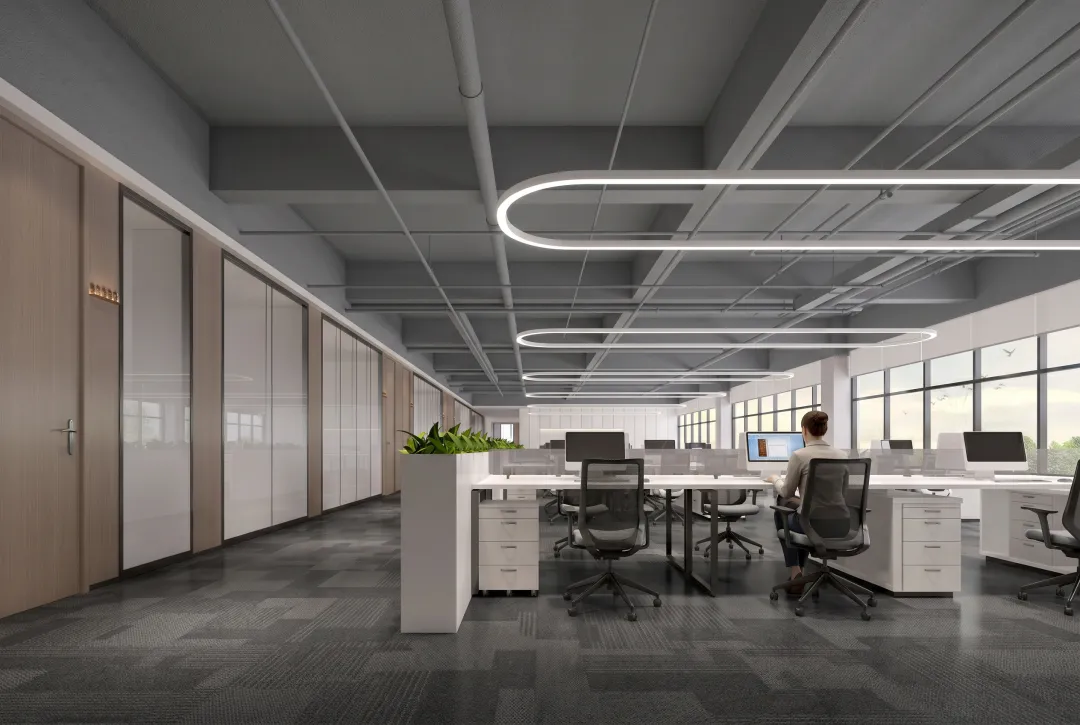
活动柜、边柜和高柜会影响脚下、转身与通行空间。检查时应把抽屉拉开、柜门打开,再模拟椅子后退和邻座经过。能够放进平面图的柜体,不一定适合实际使用;靠近桌下的配置尤其要留意腿部和线缆的位置。
Pedestals, side cabinets and tall cabinets affect legroom, turning and circulation. Open drawers and doors during checks, then simulate moving a chair back and someone passing. A cabinet that fits on a plan may still be awkward in use; under-desk arrangements particularly need checks for legs and cables.
开放格容易看见物品,适合需要快速辨认的共享用品,却也要求持续整理。封闭柜面更完整,但取物动作与内部分类不能忽略。可以按照物品类型组合使用,不必为了立面统一,把所有储物都做成同一种开合方式。
Open shelves make shared items easy to identify but require ongoing tidying. Closed fronts give a more continuous appearance, yet access and internal organization still matter. Combine them by item type rather than giving all storage the same opening method solely for a uniform elevation.
临时物品也要有边界
Give Temporary Items a Defined Place
待签文件、快递和借用设备通常没有长期位置,却最容易占据空桌。可以分别明确暂存处、责任人和取走条件,让这些物品的流转可见。收纳标签应描述内容或用途,而不是使用只有少数人理解的内部简称。
Documents awaiting signatures, deliveries and borrowed equipment often lack permanent locations and readily occupy spare desks. Define temporary places, responsible people and removal conditions so their movement is clear. Labels should describe contents or use, rather than rely on abbreviations understood by only a few people.
涉及个人或工作私密内容的物品,应结合实际管理方式确定保管与访问安排。并非所有柜门都需要复杂配置,但也不能让需要保管的资料混在开放共享架上。先确定谁需要使用,再选择相应的柜体和管理方式。
For personal or work-sensitive items, set custody and access arrangements around actual management practices. Not every cabinet needs an elaborate configuration, but material requiring safekeeping should not be mixed into open shared shelves. Identify who needs access before choosing the cabinet and its management method.
从收工到清洁走一遍
Rehearse Clearing Up and Cleaning
结束工作时,检查电脑附件、纸张和随身包能否顺手归位,地面是否留下线缆与杂物。再请清洁人员检查柜底、角落和连接处。保留少量明确的机动位置,应对正在发生的任务变化;如果持续溢出,则重新审视物品流转,而不是只继续加柜。
At the end of work, check whether computer accessories, papers and bags can be returned easily and whether cables or belongings remain on the floor. Ask cleaning staff to check cabinet bases, corners and junctions. Keep a modest, clearly defined flexible area for changing tasks; persistent overflow calls for reviewing how items move, rather than simply adding cabinets.