让自然光,成为设计的一部分。
Make Natural Light Part of the Design.
明亮不等于舒适,靠窗也不一定适合所有工作。自然光会随着朝向、天气与时间变化,同一处空间可能在清晨温和,在午后产生明显反光。把自然光纳入总部办公设计,不只是保留一排窗户,而是理解光、活动与材料之间的关系。
Brightness is not the same as comfort, and a window seat is not right for every kind of work. Natural light changes with orientation, weather and time — the same spot can be gentle in the early morning and produce obvious reflections in the afternoon. Bringing daylight into headquarters design is not about keeping a row of windows; it is about understanding the relationship between light, activities and materials.
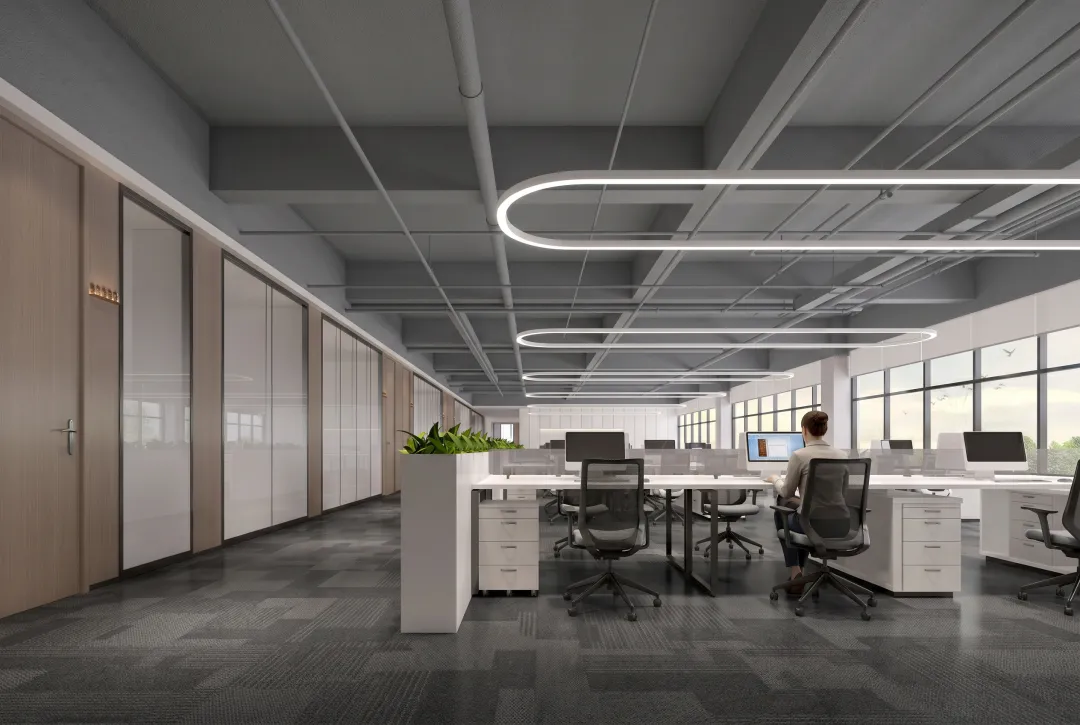
01 / 在分配功能之前,先读懂光的条件
01 / Read the Light Conditions Before Allocating Functions
不同建筑的窗墙比例、进深、周边遮挡与朝向各不相同。方案开始时,应先梳理哪些区域能获得自然光,哪些位置容易受到直射,哪些深处需要补充照明。必要时结合现场观察、测量与专业分析,不宜仅凭效果图判断真实的采光表现。
Different buildings have different window-to-wall ratios, depths, surrounding obstructions and orientations. At the start, sort out which areas receive daylight, which positions are exposed to direct sun, and which deep zones need supplementary lighting. Where necessary, combine site observation, measurement and professional analysis — do not judge real daylight performance from a rendering alone.
功能布置可以回应这些条件:长时间使用的办公区域、短暂停留的交流区,以及需要控制光线的会议与展示空间,对光的要求并不一致。先明确活动,再讨论位置,才能避免把最好的窗边全部分给低频空间,或把必须控光的功能放在难以处理的位置。
Functional arrangement can respond to these conditions: long-duration work areas, short-stay exchange zones, and meeting or display spaces that need controlled light all have different requirements. Clarify the activities first, then discuss positions — otherwise the best window frontage may be given to low-frequency spaces, or light-sensitive functions placed where they are hard to manage.
02 / 保护舒适度,比追求整面玻璃更重要
02 / Protecting Comfort Matters More Than Chasing Full-Height Glass
屏幕反射、视野中的高亮区域与直射阳光,都可能影响办公体验。工位方向、屏幕位置、遮阳方式及室内表面反射,需要一起考虑。不能简单认为窗越大越好,也不宜用深色饰面作为处理所有光线问题的统一答案。
Screen reflections, bright areas in view and direct sunlight can all affect the office experience. Workstation orientation, screen position, shading methods and interior surface reflectance need to be considered together. Do not simply assume bigger windows are better, and do not use dark finishes as the one-size-fits-all answer to every light problem.
自然采光与热环境也有联系。遮阳、空调与建筑界面的处理,应由相关专业结合项目条件协调。对既有建筑,室内设计需要尊重可调整范围,先解决使用中最明显的不适,再讨论表达。本文提供设计思路,不以未经测量的数值替代具体项目的计算与校核。
Daylight and thermal conditions are also connected. Shading, HVAC and building-interface treatment should be coordinated by the relevant disciplines under project conditions. For existing buildings, interior design must respect the adjustable range, first solving the most obvious discomfort, then discussing expression. This article offers design thinking; it does not substitute unmeasured numbers for project-specific calculation and verification.
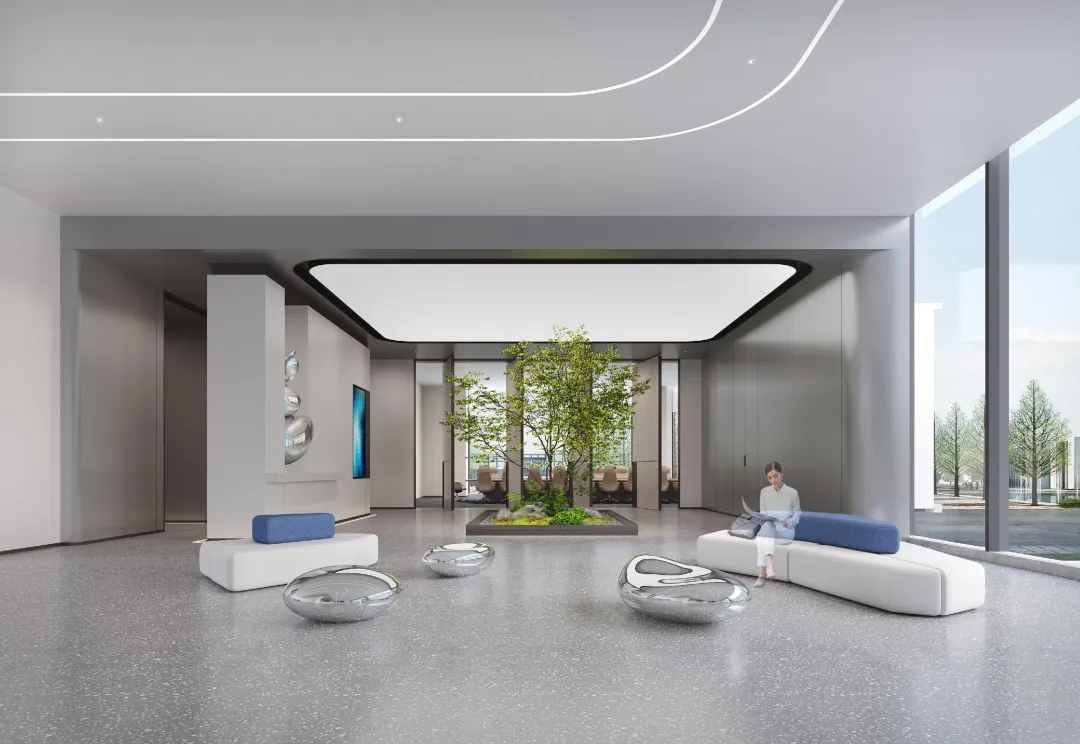
03 / 让共享空间获得可停留的光
03 / Give Shared Spaces Light Worth Staying In
茶水、会客、庭院边缘和公共休憩区,往往承载工作之间的短暂停顿。适度的自然光与对外视线,可以让这些位置更有层次,但是否舒适仍取决于座位朝向、遮阳与停留尺度。仅把沙发摆到玻璃前,并不能自动形成愿意使用的交流空间。
Pantries, reception, courtyard edges and public rest areas often carry brief pauses between work. Moderate daylight and outward views can give these positions more depth, but comfort still depends on seat orientation, shading and the scale of stay. Simply placing a sofa in front of glass does not automatically create an exchange space people will use.
湘能楚天方案展示了办公与庭院的联系,福尔程方案则包含大堂休憩与自然采光场景。配图均为设计方案,用来讨论空间关系。我们不会据此推断已经改善员工健康或提升生产效率;真实体验需要在实际使用条件下观察与验证。
The Xiangneng proposal shows the connection between offices and the courtyard; the Fuercheng proposal includes lobby rest and daylight scenarios. The images are design proposals used to discuss spatial relationships. We do not infer from them that employee health has improved or productivity has risen; real experience needs to be observed and verified under actual use conditions.
04 / 人工照明,不必与自然光各自为政
04 / Artificial Lighting Need Not Work Apart from Daylight
自然光不足、傍晚工作以及阴雨天气,都需要人工照明提供支持。基础照明、任务照明与重点照明应根据活动组织,避免为了视觉层次让工作面不足,也避免把所有灯同时打开作为唯一的使用模式。
Insufficient daylight, evening work and overcast weather all call for artificial lighting. General, task and accent lighting should be organized by activity, avoiding under-lit work surfaces for the sake of visual layering, and avoiding the single mode of switching everything on at once.
灯具位置、控制分区与遮阳设施,应尽早结合家具布局和设备条件讨论。不同场景可以采用适当的控制方式,但复杂系统也会增加管理成本。总部办公灯光设计应在体验、维护与操作之间取得平衡,并由相应专业根据适用要求核实具体指标。
Luminaire positions, control zones and shading devices should be discussed early with furniture layouts and equipment conditions. Different scenarios can use appropriate controls, but complex systems also raise management costs. Headquarters lighting design should balance experience, maintenance and operation, with relevant disciplines verifying specific indicators against applicable requirements.
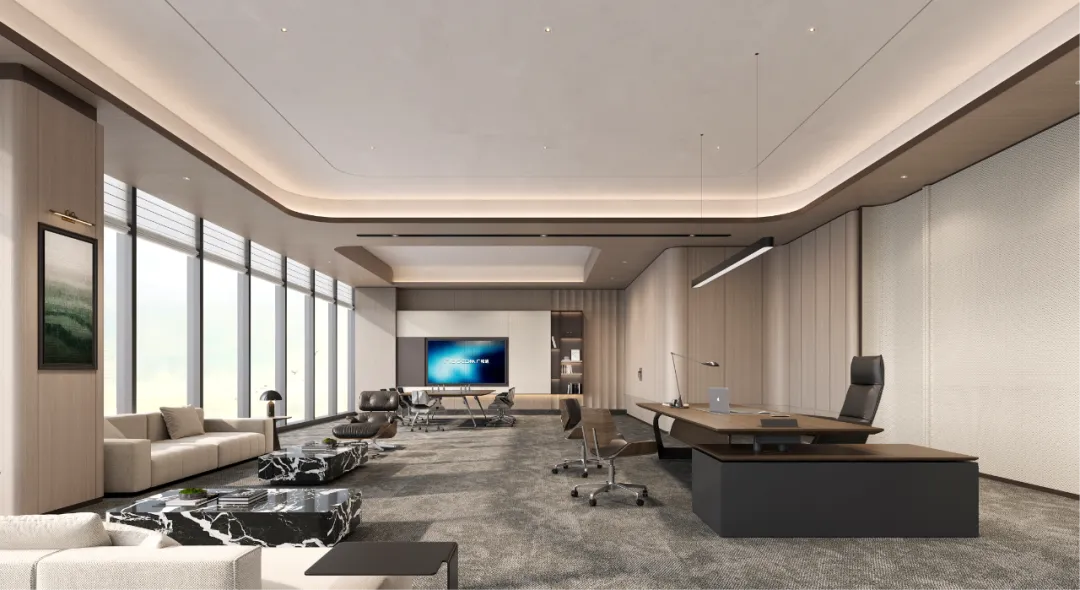
05 / 材料与细节,会改变光的感受
05 / Materials and Details Change How Light Feels
同样的光照条件下,高光石材、金属、木饰面与织物会形成不同的视觉感受。材料反射、接缝与灯光角度需要通过样品和现场条件共同观察。用一张经过后期处理的图判断空间是否舒适,容易忽略真实使用中的变化。
Under the same light conditions, polished stone, metal, wood veneer and fabric create different visual sensations. Material reflectance, joints and light angles need to be observed together through samples and site conditions. Judging whether a space is comfortable from a post-processed image easily misses the variations of real use.
观颖设计在总部办公空间设计中,将采光、人工照明、材料与日常活动一起考虑。我们关注的不只是一个固定时刻的漂亮画面,而是人在不同天气、不同工作状态下能否从容使用。让光成为设计的一部分,就是让空间的表达回到真实的一天。
In headquarters office design, GUANYING DESIGN considers daylight, artificial lighting, materials and daily activities together. What we care about is not a beautiful frame frozen at one moment, but whether people can use the space with ease across different weather and working states. Making light part of the design means bringing spatial expression back to a real day.